
Translate This Page

Share mi nuh mon

Sunday, May 28, 2006

Tribute to Desmond Dekker

Desmond Adolphus Dacres, or better known as Desmond Dekker died at the age of 64 in the United Kingdom on May 26th 2006. He was known as the pioneer of Ska Music. There claimed to be no signs of illness. His death was reported as a heart attack. He was born July 17 1941 in Jamaica. I am not going into his whole autobiography, because that is well recorded on the internet and other media publications. This is simply my own personal pictorial tribute to a man who brought not only a new era of dance but of sound to the world..ONE LOVE BROTHA D..we will miss you...


The image “http://reggae.com/images/desmond_dekker.jpg” cannot be displayed, because it contains errors.


The image “http://pop.wizbangblog.com/images/2006/05/523068.jpg” cannot be displayed, because it contains errors.


ISRAELITES - 16/04/1969


The image “http://www.livingconcerts.de/Bands/2004/Dekker_1.jpg” cannot be displayed, because it contains errors.


The image “http://www.trojanrecords.net/pics/memorabilia/dekker68lge.jpg” cannot be displayed, because it contains errors.


The image “http://www.trojanrecords.net/pics/memorabilia/dekkerlge.jpg” cannot be displayed, because it contains errors.


The image “http://www.bangbang-live.com/images/desmond%20dekker.jpg” cannot be displayed, because it contains errors.


The image “http://www.mattscdsingles.com/acatalog/desmond%20d%20the%20israelites.jpg” cannot be displayed, because it contains errors.


The image “http://www.hometheaterhifi.com/recorded-music-releases/7-12-02/music-dvd-a-dekker.jpg” cannot be displayed, because it contains errors.


The image “http://www.drumandbass-rec.com/shop/data/img/4951_1_l.jpg” cannot be displayed, because it contains errors.

why so many wires?

Electric and telephone web

Electric and telephone web

Saturday, May 27, 2006

Wednesday, May 24, 2006

Jamaican Trees

For many who have had been fortunate to either live in Jamaica or visit, one thing that stands out is its plush landscape. Jamaica is famous for its vegetation. One thing I love is the variety of trees that Jamaica has.

The image “http://mgonline.com/theobroma02.jpg” cannot be displayed, because it contains errors.
Chocolate Tree

The Chocolate Tree was named Theobroma cacao and that Latin means 'food of the gods.' If the gods eat chocolate and cacao, so does everybody else.


The image “http://mgonline.com/royal08.jpg” cannot be displayed, because it contains errors.
Royal Poinciana

Consistently voted among the top 5 most beautiful flowering trees in the world, the Royal Poinciana deserves its support. It may be the most colorful flowering tree as well.

Related to the Tamarind and mimosa tree, this native of Madagascar is a tropical legume with many attributes.

Royal Poinciana is deciduous in winter allowing sun to penetrate in months South Florida wants full sun exposure. In early summer, the voluminous red blooms appear and will hold for 4-8 weeks.


The image “http://mgonline.com/plumeria08.jpg” cannot be displayed, because it contains errors.

Plumeria or Frangipani

Plumeria is the classic Hawaiian leis tree. Its flowers are the ones used to form the colorful, tropical flower necklaces (lei) every tourist to our 50th state wears during at least one beach party.

Native to Tropical America, from southern Mexico, northern South America and the West Indies, Plumeria is rated a small tree, to about 15-18 feet and is seen in a variety of solid colors. We have seen some grow much larger. This tree can be see in the countryside of Jamaica.


The image “http://mgonline.com/banana04.jpg” cannot be displayed, because it contains errors.

Bananas are terrific tropicals and major cool indoor plants almost anywhere.

The banana family is Musaceae, and is related to the heliconias and travelers palm. Banana is really not a "tree" but a herbaceous perennial. Most are full sun plants for best fruit production, but some shade is fine, especially for ornamental varieties (no fruit, but flowers), indoors

There are many varieties from dwarf types to some over 30 feet in height

Plantains look and grow just like bananas. There are types that are a cross between banana and plantain. Some you cook, some you don't. There are also ornamental bananas. Some have colorful leaves as this one below

The image “http://mgonline.com/banana06.jpg” cannot be displayed, because it contains errors.


The image “http://mgonline.com/mango01.jpg” cannot be displayed, because it contains errors.
Mango

Mango is one of the most significant trees on the planet. Mango fruit is important in its native lands and now also eaten worldwide. Mango is also one of the oldest cultivated trees proven by writings from India over 4,000 years old. Fairchild Tropical Gardens in Miami boasts the world's largest collection, over 180 mango cultivars.


The image “http://mgonline.com/mango04.jpg” cannot be displayed, because it contains errors.


The image “http://wwwchem.uwimona.edu.jm:1104/gifs/unrpacke.jpg” cannot be displayed, because it contains errors.
Ackee Tree


ripe ackee
Ackee when it open


The image “http://www.christian-forum.us/Blog/jamaica-2005/jamaica-topless-trees.jpg” cannot be displayed, because it contains errors.
JAMAICAN TOPLESS TREES


Jamaica Caper Tree


The image “http://imagesoftheworld.org/jamaica/DSC00588.JPG” cannot be displayed, because it contains errors.
Blue Mountain Cofee


The image “http://mgonline.com/rubbertreeleaves.jpg” cannot be displayed, because it contains errors.
Rubber Tree

Ficus elastica is the classic Rubber Tree, Rubber Plant or India Rubber Plant. Native to India and Malaysia, elastica is among the oldest plants used as houseplants worldwide.

Elastica leaves and stems and even wood 'bleed' white sticky sap when broken or damaged from which rubber can be made. Some people are allergic to this sap when applied to the skin.

Like most ficus, Ficus elastica is a large tree, growing to 40-50 feet tall and even wider on its spreading branches held up by aerial roots which become multiple trunks. Many authors refer to growth habit as "widely sprawling."


The image “http://mgonline.com/draco03.jpg” cannot be displayed, because it contains errors.


The image “http://mgonline.com/draco02.jpg” cannot be displayed, because it contains errors.


The image “http://mgonline.com/ponytail03.jpg” cannot be displayed, because it contains errors.
Palm Tree


The image “http://mgonline.com/Saraca_thaipingensis01.jpg” cannot be displayed, because it contains errors.


The image “http://mgonline.com/tamarind02.jpg” cannot be displayed, because it contains errors.
Tamarind Tree


The image “http://mgonline.com/laurusnobilis05.jpg” cannot be displayed, because it contains errors.
True Bay Leaf Tree


The image “http://mgonline.com/cattleyguava01.jpg” cannot be displayed, because it contains errors.
Guava tree


The image “http://www.stjohnbeachguide.com/information%20photos/Lignum%20Vitae%20on%20Ram%20Head%20Trail.jpg” cannot be displayed, because it contains errors.
Lignum Vitae Tree, nationa
Tree of Jamaica.


The image “http://www.homeworkjamaica.com/images/graphics/lignum.gif” cannot be displayed, because it contains errors.
Lignum Vitae Flowers


The image “http://www.forestry.gov.jm/images/TREE_PLANTING/blue_mahoe_small.jpg” cannot be displayed, because it contains errors.


http://www.sos-wildlifejamaica.org.jm/Mahoe%20seedling.jpg
Blue Mahoe...Jamaica's National Tree


Tom Cringle Cotton Tree

Tom Cringle's Log, the popular 1830s seafaring adventure tale for which Scott was to be remembered and from which the tree was named, was replete with melodramatic stories of piracy, smuggling, slavery and war. First published as a serial in Britain's Blackwoods magazine from 1829 to 1833, it appeared as a novel in 1834. In Tom Cringle's Log, Scott revealed the impact the tree's size made on his senses, noting the tree's shadow as being at least 100 ft in diameter and its trunk to be 20 ft. through, of solid timber.


One of Jamaica's largest trees, this
c COTTTOt cottontree marks Haile High's location near the Airport Round-about. This old tree is the centerpoint of The Cottontree Plaza which is owned by the Hew Family of Ironshore.


and if you want to see more check out...

http://mgonline.com/trees.html

Monday, May 22, 2006

Jamaican Dawg!

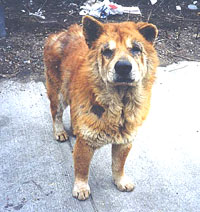
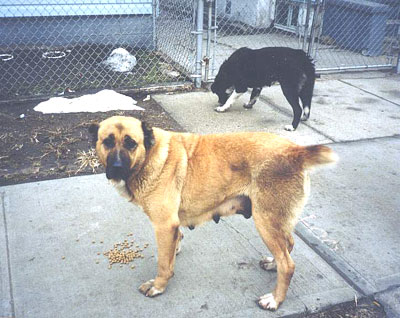
Bwoy, one thing that toursist notice when they come to Jamaica is the "Different" and unknown breed of dogs they have in Jamaica. Country dog can eat "anything"...they may look mawga but they are surviors.

I remember when I was younger, my mother would turn some corn meal in the dutch oven pot and put every scrap we had from the night before in it. Why she also had to make gravy for the dog was unknown to me.

Sometimes the dog got better food then us. Everyone knows that you might not need burglar bars in your home if you have a dog in the yard. Many times they are not tied up. Believe me they will KILL YOU....so don't take any chances trying to get the mango in the tree.


The image “http://www.jamaicans.com/moxiepix/a1512.jpg” cannot be displayed, because it contains errors.
coutnry dog, eating leftovers.


The image “http://www.easyjetinflight.com/images/2005/apr05/p051DogHouse0008.jpg” cannot be displayed, because it contains errors.
special made Jamaican style dog house for an American tourist


The image “http://www.pages.drexel.edu/~alt26/jamaicadog.JPG” cannot be displayed, because it contains errors.
Lazy dog


The image “http://www.sittersforyourcritters.com/images/snoopy.jpg” cannot be displayed, because it contains errors.
I don't know what breed of dog is this


The image “http://www.electrip.com/cyndi/Jamaica/Breakfast/palmTreesDog.jpg” cannot be displayed, because it contains errors.
Boy, what a life.


Max

I think I smell Ackee/Saltfish


What are you looking at you never seen a dog before?

Jamaica's Potholes

Jamaica is as famous for its jerk chicken, as it is for its potholes. Your typical Jamaican can manuevur around a pothole as he can around produce in his own backyard. It comes as second nature.

Saint Mary is often known as the pothole parrish of Jamaica. Sometimes vendors can be seen jumping across huge gaps to get from one side of the road to the other.


The image “http://melrosemirror.media.mit.edu/servlet/pluto?state=3030347061676530303757656250616765303032696430303437303536%5D” cannot be displayed, because it contains errors.

Sometimes potholes can provide water.


Friday, May 19, 2006

Negril

The image “http://www.negril.com/images/negril-jamaica_04-03-04.jpg” cannot be displayed, because it contains errors.


Negril's development as a resort location began during the late 1950s, though access to the area proved difficult as ferries were required to drop off passengers in Negril Bay, forcing them to wade to shore. Most vacationers would rent rooms inside the home of a Jamaican family, or would pitch a tent in their backyard. As the area garnished a welcoming and hospitable reputation over time, the first of many resorts were constructed in the mid to late 1960s.

When the first road between Montego Bay and Negril opened in the early 1970s, it helped to increase Negril's status as a new resort location. It was a two-lane paved road that ran approximately 100 yards inland from two white coral sand beaches, at the southern end of which was a small village. The long paved road from the village ran north to Green Island, home to the most of the Jamaican workers in Negril, and was straight enough to double as a runway for small airplanes.

After Negril's infrastructure was expanded -- anticipating the growth of resorts and an expanding population, a small airport built near Rutland Point, alongside several small hotels mostly catering to the North American winter tourists. Europeans also came to Negril, and several hotels were built in order to cater directly to those guests.

For years, Negril's has been rated as one of the top ten beaches in the world by many travel magazines. The north end of the beach is home to the large, all inclusive resorts, and to the south is the smaller, family-run hotels. This combination gives the Negril area a large variety of rooms, services and prices. South of downtown Negril is West End Road, known as the cliff area, which is lined with resorts that offer more privacy. These areas offer easy access to waters good for snorkeling and diving, with jumping points reaching 40+ feet.

Negril is still fairly underdeveloped, although this remains a significant factor in its undoubted charm. This, however, may not last, as a new highway from Montego Bay will bring more tourists. It is also becoming a very popular location for US college students to visit during spring break.

The last few years have seen major development along the famed "Seven Mile Beach." The resorts include Couples, Sandals, Beaches, RIU Hotels, Grand Lido and Hedonism II. A branch of Jimmy Buffett's chain restaurant/bar Margaritaville and a duty free zone have also been added.



The image “http://www.negril.com/images/negril-jamaica_17-01-04.jpg” cannot be displayed, because it contains errors.
Tourist at one of Negril's popular beaches


The image “http://www.negril.com/images/negril-jamaica_25-01-04.jpg” cannot be displayed, because it contains errors.

Sammy's is just one example of some of the vendors that come to Negril


The image “http://www.negril.com/images/negril-jamaica_27-01-04.jpg” cannot be displayed, because it contains errors.
Sign at Chaarela Inn letting people know about the TEA HOURS.


The image “http://www.negril.livenet.pl/img/logoo.gif” cannot be displayed, because it contains errors.

Unofficial Logo of Negril


The image “http://www.maherconsulting.com/3dives/images/7_12Lisa-Negril.jpg” cannot be displayed, because it contains errors.
Photo of 3 dives Cliff Bar in Negril


Lydie checks the fire under the lobster on the grill...


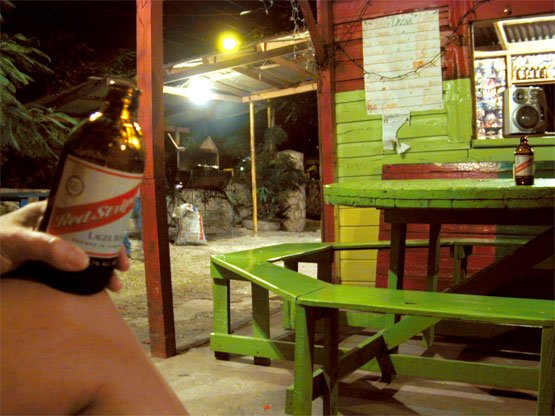
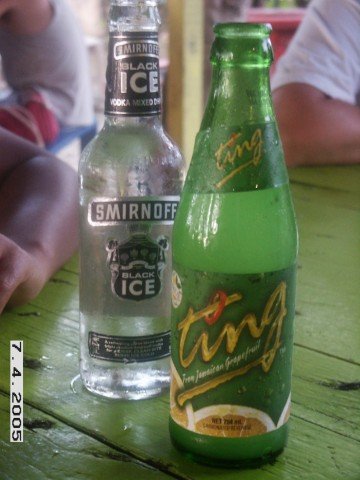
TIng and Smirnoff Ice..What a wonderful way to
end your NEGRIL visit!
.