Translate This Page

Share mi nuh mon

Saturday, July 29, 2006

Coming In From The Cold

The image “http://www.vinyltap.co.uk/gallery/bo/bobmau5009413770004100.jpg” cannot be displayed, because it contains errors.

In 1980 Bob Marley released his album entitled "UPRISING." Many people may recall the turmoil that was present in Jamaica from the mid 70's to the early 80's. Jamaica's two political factions, The Jamaica Labor Party(JLP) and the Peoples National Party (PNP) were at odds with each other. Their was constant fighting in the street and many people died during this time.

In the face of this hopelessness Bob Marley wrote one track from that Album "Coming in From the Cold," to help the people who were suffering during that time. He wanted something to give them hope. He wanted people to know that the most important man that they saw was once a baby, was once a child and in the end all men are created equal. This was a song that was used by the Jamaican Tourist Board and by Air Jamaica to welcome back Jamaicans to the island. This was one of the last tracks that Bob completed prior to his death. I have copied the lyrics here because I believe for many people going through a lot of things in their life that Bob was speaking to them...to us...to me.


The image “http://www.musikmarkt-wiesbaden.de/images/BOB%20MARLEY%20uprising.JPG” cannot be displayed, because it contains errors.

Source:http://www.bobmarley.com/songs/songs.cgi?coming


Coming in from the Cold


In this life, In this life, in this life
In this oh sweet life
We're coming in from the cold
We're coming in, coming in, coming in
Coming in from the cold

It's you, it's you, it's you I'm talking to
Well you, it's you, it's you
It's you I'm talking to now
Why do you look so sad and foresaken
When one door is closed
Don't you know another is open

Would you let the system
Make you kill your brotherman
No dread no
Would you make the system
Make you kill your brotherman
No dread no
Would you make the system
Get on top of your head again
No dread no
Well the biggest man you ever
Did see was just a baby

In this life, in this life
In this oh sweet life
We're coming in from the cold
We're coming in, coming in, coming in
We're coming in from the cold
It's life, it's life, it's life
Coming in from the cold
We're coming in, coming in, coming in
Coming in from the cold

It's you, it's you, it's you I'm talking to
Well you, it's you, it's you
It's you I'm talking to now
Why do you look so sad and foresaken
Don't you know
When one door is closed
Don't you know many more is open

Would you let the system
No dread no
Would you let the system
Get on top of your head
No dread no
Would you let the system
Make you kill your brotherman
No dread no
The biggest man you ever
Did see was once a baby

In this life, in this life, in this life
In this oh sweet life
We're coming in from the cold
We're coming in, coming in, coming in
Coming in from the cold
We're coming in, coming in, coming in

Friday, July 28, 2006

Health Crisis


While scanning the Jamaica Gleaner today, I saw where there is a possibility of a health crisis, due to the nurses strike. It is odd I speak to my American counterparts and I think many of them view Jamaica as this paradise island (which of course it is),without any real problems, aside from the apparent poverty.

Jamaica's main hospitals, Victoria Jubilee, May Pen, Kingston Public, Mandeville, Saint Ann's Bay and Port Antonio Regional all have reported (as of today) that a large majority of the nurses' have indeed called in sick. An interesting request presented by the University Hospital of the West Indies to the family members, was that they come and give aid to their relatives in the hospital.

Now Jamaica Nurses Association of Jamaica(NAJ) while understanding the impact it will have on the country, stands behind its nurses. You have to understand in this country the demand for good medical care is high. However, in a country like Jamaica, with many of its doctors and nurses going overseas for higher pay, even with 15% reduction that can seem like a catastrophe.

I know growing up that my granny knew what herbs to go and cut to make us feel better. I often wonder why the people in the city haven't relied on some of the expertise from what we term as "Bush Doctors." In America they are known as Holistic experts. Sometimes technology is not all it is cracked up to be. Well, that is my opinion.

Thursday, July 27, 2006

Big up to Miss Lou

The image “http://www.yorku.ca/nlrowell/images/misslou2.gif” cannot be displayed, because it contains errors.
The world has a terrible loss with the recent passing of Miss Louise Bennett. She was the unofficial ambassador for Jamaica. Below is a mini, bio of Miss Lou. I know she has so many official and unoffical accolades throughout the world today.http://www.jamaica-gleaner.com/gleaner/20060727/ent/ent3.html

Louise Bennett was born in Kingston in 1919. She was the daughter of the late Augustus Cornelius Bennett (businessman) and his wife Kerene (nee Robinson).

She was educated at Calabar Elementary School, Ebenezer Primary, St. Simon's College (1933-36), Excelsior High School (1936-38) and Friends College (Highgate).

The young Louise always had an irrepressible sense of humour and a flair for dramatics. She described herself as "an average student".

On Christmas morning 1936 Louise made her first real public appearance when she performed at the annual concert at the Coke Methodist Church. She was then 17 years old. She recited a poem she had written in Jamaican dialect and received a prize of one guinea ;($2.10) from MC Eric Coverley, who would later become her husband.

When Louise Bennett began writing and reciting her dialect poems in the late 1930's and early 1940's she was regarded as an embarrassment. Speaking dialect was felt to be socially unacceptable and only the poor and illiterate spoke patois. The British (Oxford) accent was regarded as the epitome of cultured speech.

http://www.jamaica-gleaner.com/gleaner/20030907/ent/Images/MissLouH20030729RB.JPG

At Excelsior High School even some of the teachers did not see the value of Louise Bennett's poetry. But she was encouraged by persons such as W.A. Powell, Hugh Sherlock and the late Astley Clarke. She remained undaunted by the sometimes hostile attitude toward dialect. She insisted on presenting dialect poetry which reflected the lifestyle, philosophy and sense of humour of the Jamaican people.

We will miss you Miss Lou.


The image “http://www.fb10.uni-bremen.de/anglistik/kerkhoff/DubPoetry/Bennett/louise_bennette.jpg” cannot be displayed, because it contains errors.


The image “http://www.reggaetimes.com/articles/uploads/loise_bennett__book_for_art.jpg” cannot be displayed, because it contains errors.

Tuesday, July 25, 2006

Jamaican Patois

You cannot come to the island of Jamaica, without noticing the people do speak differently. Actually, it is forbidden in many Jamaican homes to speak, "patois."

The debate going on in Jamaica for many years has been the wheter or not Patois is a language or just a slang for Jamaica.


The technical definition of the term Creole means-, a language which comes into being through contact between two or more languages. The most important part about this definition is that a new language comes about which was not there before, yet it has some characteristics of the original language(s) and also has some characteristics of its own. The Creole of Jamaica and the Caribbean is referred to as an 'English-lexicon' and this language came about when African slaves were forced into a situation where English, or at least a very reduced form of English, was the only common means of communication.

The slave traders and owners spoke English while the slaves spoke a variety of African languages and the slaves had to assimilate by learning English which explains why much of the vocabulary is English in origin. Although there is much English vocabulary, many words were also adopted from African languages when no equivalent English word could be found such as, words for people, things, plants, animals, activities, and especially religious words (Sebba 1, 1996, 50-1.) The name Jamaica itself was derived from the Arawak word Xaymaca meaning "Island of springs," but no other known trace(s) of the Arawak, the indigenous inhabitants of Jamaica, exist today.

The debate surrounding the use of Patois as opposed to Standard English includes a number of issues and dates back to the times of slavery when Jamaicans had Standard English presented as a superior language and the indigenous language was denigrated to an inferior status. Today, more than 90% of the 2.5 million people in Jamaica are descendants of slaves brought from western Africa by the British. English is the official language but, Patois is the local language and still holds its' Africa.

Below is an example of Jamaican Patois.

For more examples or more of the history please see: http://www.reggaemovement.com/History/patois.htm


USA Translation to Jamaican
by Donmerican

USA: It's been a long time since I have seen you, girl.
JA: Gal yuh noh dead yet?

USA: Lord, we have lost electricity again!
JA: Lawd Gad, current lack aff again!

USA: Where did you buy that awful bracelet, Cindy?
JA: A weh yuh buy dat deh big ole ugly bangle deh, missus?

USA: Hors d'oeuvres.
JA: Ah wah dis likkle sinting yuh a gi me?

USA: I think something is wrong with Susan, she might have the flu.
JA: Lawd Gad, breeze tek up Suzie!

USA: Girl, those shoes are the bomb.
JA: Gyal, yuh roach killa dem a seh one out deh.

USA: Oh my gosh, I just broke Mom's expensive plate.
JA: Lawd mi Gad, mi bruk up Mama stoosh crackry.

USA: Aren't those pants a bit short?
JA: Yuh did a expect flood ar yuh tek yuh measurement inna wata?

USA: Why are you squeezing the mangoes like that?
JA: Lissen mi nuh, mi a beg yuh stap fingle-fingle up di mango dem.

USA: Sir, please don't throw my luggage like that.
JA: Aye buff teet bwoy, tap fling up-fling up mi bag dem suh man.

USA: I wish you would quit lying.
JA: Tap di blinkin lyin, yuh ole liyad.

USA: Lift the hood off the car for me, John.
JA: Hey my yute, fly di bonnet!

Saturday, July 22, 2006

The history of Jamaican Jerk

If you visit Jamaica and have not experienced Jerk Chicken, or Jerk Pork or any jerk recipes, man you have not lived.

The term jerk is said to come from the word charqui, a Spanish term for jerked or dried meat, which eventually became jerky in English. Another origin is linked to the jerking or poking of the meat with a sharp object, producing holes which were then filled with the spice mixture. Like most Caribbean islands, Jamaican foods are derivative of many different settlement cultures, including British, Dutch, French, Spanish, East Indian, West African, Portugese, and Chinese. The origins of jerk pork can be traced back to the pre-slavery days of the Cormantee hunters of West Africa through the Maroons, who were Jamaican slaves that escaped from the British during the invasion of 1655.

What is Jamaican Jerk?

You can easily make jerked foods at home with a good recipe and an understanding of the requisite ingredients. The seasoning has three main ingredients: chile pepper, allspice berry, and thyme. Other spices and herbs (which may include cinnamon, ginger, cloves, garlic and onion depending on the cook) are combined with these and applied to the food which is then allowed to marinate. Finally, food is grilled to tender perfection.

Be forewarned, if you cannot handle spicy-hot foods, jerk may not be for you. Deletion of the chile pepper vastly changes the end product, and it's just not jerk without the heat! Take a look at the three most important ingredients of jerk seasoning before trying an authentic Jamaican jerk recipe. The pepper mentioned below is extremely hot. If you think Jalepeno is hot then don't try it in your recipe.

Scotch Bonnet
The first main ingredient of jerk seasoning is Scotch bonnet pepper, a variety of the habanero, so named for the shape of the pepper which resembles a Scotch tam or hat. This pepper ranges in color from green to yellow to red, often mixed depending on the ripeness of the pepper. The purpose of the chile pepper was not only to spice up normally bland foods, but also to preserve foods when refrigeration was not easy to come by and to aid in digestion. Habanero chiles are arguably the hottest in the world, according to the Scoville Chart, one thousand times hotter than the jalapeno. If you can't find Scotch bonnets in your local grocery store or ethnic market, you can substitute jalapenos, but it will be worth your effort to hunt down the real thing. You can also reduce the heat by omitting the seeds of the chile. As with all chiles, use rubber gloves when handling and cutting, avoid inhaling the fumes, and thoroughly wash your hands after handling.

I didn't put up all the history of the ingredients, because I think the others are pretty self explanatory.

Below are some Jerk Dishes.

http://www.starportfoods.com/SmokeyPassionJerkChickenPltWeb.jpg
Jamaican Jerk Chicken


http://www.starportgourmet.com/sitebuilder/images/SalmonPltWebA-377x366.jpg
Jamaican Jerk Salmon


http://www.diabeticcooking.com/food_shots/1/168/16898.jpg
Jamaican Jerk Turkey wraps


http://www.bcturkey.com/recipes/scan_5.jpg
Jamaican Jerk Turkey Kabobs


Below is a pretty nice recipe for you to try

Nat's Real Jamaican Jerk Recipe #112420

Jerk sauce for Chicken, Pork, Beef or even Fish.
1/2 cup allspice berries
1/2 cup packed brown sugar
6-8 cloves garlic
2 scotch bonnet peppers (use more if you dare)
2 tablespoons fresh thyme leaves
12 green onions
3 tablespoons Pickapeppa Sauce
1 teaspoon cinnamon
1/2 teaspoon nutmeg
1 lime, juice of

salt and pepper

10 servings Change size or US/metric

5 minutes 5 mins prep

*recipe can be found at http://www.recipezaar.com/112420

Thursday, July 20, 2006

Jamaica's Justice System

http://www.jamaicaobserver.com/magazines/AllWoman/images/20010910T090000-0500_13925_OBS_BRITISH_PRISONS__HOME_TO_MANY_JAMAICAN_WOMEN_1.gif

The Jamaican Penal Code and the Prevention of Crime Law of 1963 established minimum penalties for certain crimes. Minor crimes are prosecuted in the courts of petty session, headed by justices of the peace, who are also called lay magistrates. The Resident Magistrate's Court and the Supreme Court hear both civil and criminal cases (see Government and Politics, this ch.).

The more serious criminal cases usually are tried in the circuit courts of the Supreme Court. All circuit court trials are jury trials; the jury is composed of seven persons except for homicide cases, which require twelve jurors. A majority of jurors may render verdicts, except in capital cases in which unanimity is required. The resident magistrate, petty sessions, and gun courts hold trials without juries. Most trials, with the exception of the Gun Court, are open to the public.

The image “http://www.jinxmagazine.com/images/system_art.jpg” cannot be displayed, because it contains errors.

The Gun Court was established on April 2, 1974, as a combination court and prison to combat the increase in violent crimes involving firearms. It operates as an extension of the Supreme Court and deals with crimes involving guns. The Gun Court Act allowed detention and prosecution of subjects and authorized a single resident magistrate's court to issue prison sentences to those convicted of illegal possession of firearms or ammunition. In July 1975, the Privy Council in London ruled that the Gun Court Act was constitutional. The Privy Council held, however, that mandatory sentences of indefinite detention with hard labor could not legally be imposed by the resident magistrate presiding over the Gun Court.

The 1983 Gun Court Amendment Act enabled the resident magistrate courts in all parishes except Kingston, St. Andrew, and St. Catherine to decide whether a particular charge would be dealt with in the Resident Magistrate's Court or should be referred to the Gun Court.No bail is permitted in gun court cases even before conviction; all persons convicted receive an indeterminate jail sentence of up to life, with release given only when these cases are reviewed by the Privy Council.

The 1983 Gun Court Amendment Act eliminated the previously mandatory sentence of life imprisonment. It also removed to juvenile courts the hundreds of cases involving youths under the age of fourteen, who had been given life prison sentences before its enactment; many were paroled. Amnesty International has criticized Jamaican policy on capital punishment, claiming that it contravenes the International Covenant on Civil and Political Rights, ratified by Jamaica in 1975. In early 1987, 170 prisoners in Jamaica remained under sentence of death

Jamaica now is undergoing some really serious changes. It recently has denied its inmates the use of condoms in the prisons. This is, in my own opinion, a dangerous move. To deny that homosexuality exists in the prison system is to put many people on the island in danger. These men are having unprotected sex, come out and infect their mates. Spreading Aids and HIV contracted diseases further. This is just plain wrong, in my opinion.

Monday, July 17, 2006

Jamaican Rum

Spirit of Jamaica
If you mention Jamaica to most folks, they will tell you about the sand, the beach, the fun, and of course the rum. Rum, making up a large portion of exotic drinks on the island. The most popular being "Rum Punch." Do not let the sweetness fool you. Two glasses can sometimes do you in if your are not use to drinking Jamaican Rum.

I found this short synopsis of the history of rum. "Rum is an alcoholic beverage distilled from sugarcane by-products that are produced in the process of manufacturing sugar. Molasses, the thick syrup remaining after sugarcane juice has been crystallized by boiling, is usually used as the basis for rum, although the juice itself, or other sugarcane residues, is also used. The molasses is allowed to ferment, and the ferment is then distilled to produce a clear liquid that is aged in oaken casks. The golden color of some rums results from the absorption of substances from the oak. The darker, heavier Jamaican rums--made for the most part in Jamaica, Barbados, and Guyana -- are produced from a combination of molasses and skimmings from the sugar boiling vats; the darkest, Guyana's Demarara, is produced by very rapid fermentation and is not particularly heavy bodied. The fermentation of other substances in the molasses enhances the liquid's flavor and aroma.

"After distilling, the rum is sometimes darkened by the addition of caramel and is aged from 5 to 7 years. Lighter, drier rums from Puerto Rico and the Virgin Islands are more rapidly fermented with cultured yeasts and are aged from 1 to 4 years. (http://www.avirtualdominica.com/rum.htm)

Appleton Rum is considered one of the finest rums in the world. While perusing the site (many who read this blog know I love imagery) I found several rums and rum products that the tourist seem to crave when they come to the island. Enjoy the pictures dem mon.


http://www.pilotex.com.tw/ecommerce/webstore_01/images_01/WS_12_rum.jpg


http://www.rum.cz/galery/cam/jm/finzi/img/jm_26.jpg


The image “http://www.rum.cz/galery/cam/jm/finzi/img/jm_17.jpg” cannot be displayed, because it contains errors.


http://www.rum.cz/galery/cam/jm/charley/img/jm_29.jpg


http://www.rum.cz/galery/cam/jm/charley/img/jm54.jpg


http://www.rum.cz/galery/cam/jm/goodridge/img/jm_35.jpg


http://www.rum.cz/galery/cam/jm/patrick/img/jm_40.jpg


http://www.rum.cz/galery/cam/jm/other/img/jm_37.jpg


http://www.rum.cz/galery/cam/jm/mills/img/jm57.jpg


http://www.incredibleinedibles.shoppingcartsplus.com/i/WINE%20BOTTLES/IM005387.JPG


http://www.rum.cz/galery/cam/jm/hill/img/jm66.jpg


http://www.rum.cz/galery/cam/jm/marino/img/jm87.jpg


http://www.rum.cz/galery/cam/jm/wray/img/jm_9.jpg


http://www.rum.cz/galery/cam/jm/wray/img/jm19.jpg

For more pictures please check out the following site...http://www.rum.cz/galery/cam/jm/finzi/


Saturday, July 15, 2006

The Braeton Massacre

On 14 March 2001, the police leaded by Superintendent Reneto Adams Reneto Adams, head of Crime Management Unitkilled seven young men at a house in Braeton, Kingston.
The police claimed the men fired upon them after some 60 officers arrived at the house and requested them to give themselves up. According to the police, all seven were killed when the gun fire was returned.
However, residents in the area claim they heard the men pleading for officers to spare their lives before the police took the men back inside the house one at a time and apparently executed them.
A pathologist, sent by Amnesty International, observed the autopsies and noted that six of the seven youths had been shot in the head, with at least one shot fired at close range, and concluded that it was "highly unlikely" that the shooting occurred in the manner suggested by the police and that the pattern of gunshot wounds was "more consistent" with the theory that the men were shot from inside the house.

Why did they feel the need to execute those young children?. Sadly the gunplay in Jamaica is real. This is surely a blight on the police department in Jamaica...60 policemen to answer one complaint...sad..


Wednesday, July 12, 2006

The Maroons

The image “http://www.unlockingthearchives.rgs.org/resources/images/maroons-en.jpg” cannot be displayed, because it contains errors.
This is how it looks today.


This is a bit long...but historicially the Maroons are the oldest inhabitants of the island.

In May of 1655, under a plan aimed against Spain known as the “Western Design”, the English Fleet of 38 ships and about 8,000 men sailed into Kingston Harbor. The “Roundheads” under Oliver Cromwell’s leadership had many motives for attacking the Spanish. Chief among them was to avenge the deportation of English Settlers from St. Kitts in 1629 and the countless attacks on English ships resulting in the murder and enslavement of their crews. The Expedition assembled to enforce the “Western Design” was perhaps the worst equipped and poorly organized to ever leave England. Sailing in secrecy from Portsmouth England at the end of December 1654, the Expedition achieved some moderate success when, after five weeks at sea, they stopped in Barbados. There eleven Dutch ships were seized by Admiral Penn to be used as transports. Food and arms were demanded along with 4,000 men recruited for the Expedition Army.

Santo Domingo, capital city of Hispanola and a Spanish stronghold was the next target according to the instructions set down in the “Western Design” plan. A tactical error in landing the forces 30 miles outside the city without sufficient food or water caused panic and disorder. Sickness from drinking polluted water and the long march made the Expedition vulnerable to Spanish lancers and local cattle hunters. A complete massacre of the nearly 12,000 man Expeditionary force was only averted by successfully landing a party of sailors who covered their retreat. Nearly 4,000 men were left behind as dead or missing. Fearful of Cromwell’s anger over the failure at Santo Domingo, a hasty decision was made to attack another thinly populated and weakly defended Spanish island; Jamaica.


Children of Accompong Town

With less than 1,500 Spaniards on the island and only about 500 able to bear arms, the English made another blunder. Instead of pressing the attack and taking advantage of the superiority of sheer number of troops, they handed the Spaniards an offer to surrender with terms to leave the island if they so desired. Venables, the Expedition leader, unwisely gave the Spaniards time to consider these terms. During this time the Spanish turned their cattle loose and escaped to the North Coast and from there to Cuba. When the Expeditionary army marched into Spanish Town, they found it empty and bare of booty. In anger and disappointment, they destroyed much of the town.

Before departing, the Spanish also freed their slaves and left them behind in the mountains to harry the English until they could amass a force for reconquest of Jamaica. These freed slaves, later to become famous as the Maroons, were organized into a fighting force by Christoval Arnaldo de Ysasi before he too escaped to Cuba. These first Maroons settled mainly in the St. John district of St. Catherine still called Juan de Bolas after one of their chiefs whose real name was Juan Lubolo, on Vera-mahollis Savanna (Los Vermejales) and on the Rio Juana (exact location uncertain). The name “Maroon” probably derived from the Spanish “cimarron” meaning wild, untamed. The Maroons whose number kept swelling from the addition of more runaway slaves continued to raid the English plantations and become a thorn in England’s plan to colonize Jamaica but it was tolerated until 1663 when an offer was made for land and full freedom to any Maroon who surrendered. The Maroons ignored the offer. This failure to come to terms was to result in 76 years of irregular warfare; expenditure of nearly 250,000 English Pounds and passing of some 44 Acts of the Assembly

The second immigration of free Blacks into the province of Nova Scotia was similar to the first in that it developed from events entirely divorced from Nova Scotia history. From the time of British conquest in 1655, the Maroons in Jamaica, waged war against the British colonizers of the island. The Jamaican Government succeeded in overcoming the Maroons in 1796, which was after 140 years of intermittent warfare. The Legislature, vengeful and certainly tired of the cost of maintaining order, decided to rid themselves of "the problem". Immediate actions were put in place for the removal of one group of Maroons (Trelawney), with their settlements in lower Canada (Quebec). Upper Canada (Ontario) had also been suggested as a suitable place, however, it was eventually decided that this group of individuals be sent to Halifax, N.S. until any further instructions were received from England. Two gentlemen Messrs Quarrell and Octerloney, were sent from Jamaica with the Maroons as Commissioners.

On June 26, 1796, the Dover, Mary, and Anne sailed from Port Royal Harbour, Jamaica to Halifax. One arrived in Halifax on July 21, the other two followed two days later totaling 543 men, women and children. The Commander-in-Chief of the British Army in North America who at that time was The Duke of Kent, impressed with the proud bearing and other characteristics of the Maroons, employed the entire group to work on the new fortifications at the Citadel Hill in Halifax. The Lieutenant-Governor Sir John Wentworth believed that the Maroons would be good settlers. He then received orders from the Duke of Portland to settle them in Nova Scotia. Following this the two commissioners responsible with credit of $25,000 (pounds) Jamaican currency from the government of Jamaica, expended 3,000 (pounds) on 5,000 acres of land and built the community of Preston. Governor Wentworth also was granted an allowance of 240 (pounds) annually from England to provide religious instruction and schooling for the community. After the first winter, the Maroons, raised in an independent and dominating culture and not impressed with the apparently servile virtues of cultivating the soil, became less tolerant of the condition in which they were living in.

The Maroons proved themselves to be excellent fighters, they were said to have been organized shortly after they arrived into military units to the style of self-government they had been used to in Jamaica. Forty gross of coats with metal buttons, and sixty gross of vests were order for their use in 1796. The insignia on the buttons was an alligator holding a wheat sheaf and an olive branch.
The image “http://www.antislavery.org/breakingthesilence/images/slave_routes/pictures/jamaica-maroons2.jpg” cannot be displayed, because it contains errors.


for more informaton on the Maroons...http://www.jamaicans.com/info/maroons.htm

Sunday, July 09, 2006

Yardee Girls

Jamaica has some of the most beautiful women in the world...nothing like the girls from yard. What makes many Jamaican women so beautiful is not so much their inner beauty but that they are real. By real I mean Jamaican women view life as life is. If you are poor, you don't know it because you make the best of what you have.

Jamaican women come in all shapes and sizes, with various types of hopes and dreams. I dedicate this space to my "yardee friends."

We truly represent, "out of many one people" (the Jamaican Motto)

The image “http://www.friendsofjamaica.org/updated_images/photo_girls.gif” cannot be displayed, because it contains errors.


The image “http://www.galenfrysinger.com/Photos/jamaica11.jpg” cannot be displayed, because it contains errors.
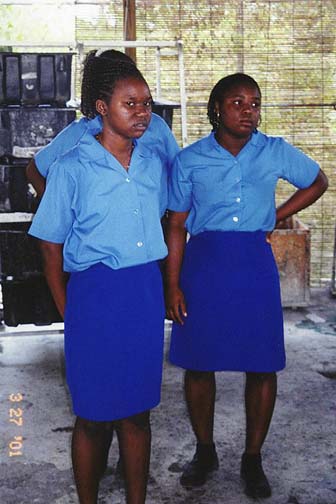
Jamaican school girls


The image “http://www.yardflex.com/archives/TamaraA_yardfllex.jpg” cannot be displayed, because it contains errors.
A Jamaican model


The image “http://www.yardflex.com/archives/ShannaC.jpg” cannot be displayed, because it contains errors.


The image “http://www.hardbeatnews.com/adminis/photos/veretech0423.jpg” cannot be displayed, because it contains errors.
track and field girls


The image “http://www.fast-women.com/photos/murraykeatinge03/murray37.jpg” cannot be displayed, because it contains errors.


The image “http://www.caribbean-women.com/pictures/alexandra_arroyo_audiverth2.jpg” cannot be displayed, because it contains errors.


The image “http://slimages.macys.com/is/image/MCY/products/3/optimized/155173_fpx.tif?wid=250&fmt=jpeg&qlt=100” cannot be displayed, because it contains errors.


The image “http://www.jamaicanwomen-jamaicangirls.com/sitebuildercontent/sitebuilderpictures/b.jpg” cannot be displayed, because it contains errors.


The image “http://www.painetworks.com/photos/fa/fa0480.JPG” cannot be displayed, because it contains errors.

Special Jamaican Wedding

Jamaican Beach Wedding


Wow...isn't it wonderful...a fantasy wedding..on a Jamaican
beach..with the naked people in the background.

Thursday, July 06, 2006

Oxtail Stew

The image “http://www.jamesrubio.net/grinds/wp-content/images/thumb-81605034.jpg” cannot be displayed, because it contains errors.

Posted Sunday, March 14, 2004

INGREDIENTS :

  • 1 oxtail about 2-2.5 lb. Cut up
  • 4 tblsp. cornflour
  • 2 tblsp. cooking oil
  • Salt and Black pepper
  • 4 rashers (slices) Bacon (Sugar cured, rindless)
  • 2 medium onions sliced
  • 1 clove garlic crushed
  • 4 carrots pared and sliced
  • 1 cup peeled chopped tomatoes
  • 1 pint (16 fl. Oz) hot water
  • 2 stalks green onions finely sliced
  • 1 spring thyme
  • 1 can butter beans (Lima beans)

METHOD:

  1. Trim away excess fat and place oxtail in boiling water for 2 to 3 minutes to blanch.
  2. Drain well on absorbent paper and coat with cornflour.
  3. Sprinkle with salt and pepper.
  4. Heat oil in heavy skillet and brown oxtail on both sides removing when brown.
  5. Pour off excess fat.
  6. Dice bacon and fry for a few minutes.
  7. Return oxtail to pot with bacon, add carrots, onion, garlic, tomatoes and hot water.
  8. Cover and simmer gently for 3.5 to 4 hours or until oxtail is almost tender.
  9. At this stage add more liquid if necessary and season.
  10. Cover and simmer for 20 to 30 minutes. Add the butter beans and allow to simmer for 3 to 4 minutes.
  11. Serving for 4.
Recipe is from http://www.jamaicans.com/cooking/meat/oxtail.shtml