I found this really nice video on Daily Motion. Check it out!

ALL THINGS JAMAICAN- NO PROBLEM MON
Showing posts with label ireigal. Show all posts
Showing posts with label ireigal. Show all posts
Wednesday, June 24, 2009


Monday, April 13, 2009
A Brief History of Jamaica
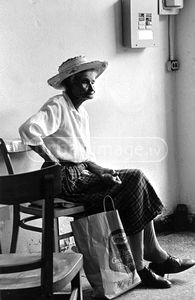



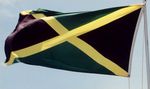
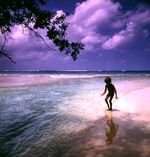
This is a bit long, but someone in my class asked me to repost it. So here it is. If you want a little bit of Jamaican history read below..
Brief History of Jamaica
Compiled from various history books by Donna Essix
I. Pre-Colombian Jamaica
Prior to the arrival of Columbus in 1494, Jamaica was inhabited by Arawaks, living in simple communities based on fishing, hunting, and small scale cultivation of cassava. The impact of the contact with the Spanish was traumatic, and these communities disappeared in 70-80 years. Plunder, disruption of economic activities, new diseases, and migration decimated the indigenous population. Only a few artifacts-facts, examples of which are on display at the small museum at White Marl, and a few Spanish corruptions of place names (such as Ocho Rios) remain from this period. Otherwise, there is no Arawak influence on the subsequent development of life on the island.
II. The Spanish Occupation, 1494-1655
Disappointed by the absence of gold on the island, the Spanish used Jamaica as a base for supporting the conquest of the Americas, particularly Mexico with its treasures of gold and silver. The population of the Spanish settlement, including their slaves, was never large. It was administered from the Town of Santiago de la Vega, now called Spanish Town, and much of the architecture of the original buildings is still evident today in the town square. Economic activity consisted primarily of production for domestic consumption, and to a lesser extent the supply of Spanish ships.
In 1655, it was captured by the British expedition led by Admirals Penn and Venables, following their unsuccessful invasion of Hispaniola. By this time, the island was of little significance to the Spanish crown, and accordingly, very little was done to defend it against the British. As with the previous period, the influence of the Spanish settlement on the subsequent social, economic and political life of the island was marginal. Apart from remnants of buildings with the distinct
Spanish colonial architectural styles, and names of places, there is very little visible evidence of the Spanish occupation.
III. The Slave Economy, 1655-1838
After a brief period of experimenting with indentured European labor, the British turned to large scale importation of Africans to be used as slaves on the sugar plantations. In its hey-day, Jamaica was one of "the jewels in the English crown" because of the fabulous prosperity it brought to the English plantation owners directly, and indirectly to those cities, such as Liverpool and Bristol, which serviced the trade with Jamaica and the rest of the British Caribbean (West Indies). Plantation slavery was based on the Triangular trade among England (manufactured goods), Africa (slaves), and the Caribbean (sugar), which itself was the basis for what later emerged as the international economy. International trade was so important to the Jamaican economy that when the American war of independence disrupted trade between what was then the "North American colonies" and the Caribbean, 15,000 thousands of slaves died of starvation in Jamaica alone.
The plantation dominated economic life in every sense. It occupied the best lands, the laws supported the slave system, and in general all commercial and other economic activity depended on the rhythm of activity of the plantation. Some slaves inevitably ran away from the estates to live in small bands in the mountains as Maroons.
In recognition of her leadership in the Maroon wars against the British, Nanny was eventually named a national hero. Except for the Maroons, all agricultural activity took place on the plantations. The towns served as the commercial sites for the export of sugar and the importation of the inputs for production.
The political system consisted of a governor and his executive council, and an assembly of representatives elected on a limited franchise determined by property ownership. The politics of this period was characterized by an uneasy alliance between the governor as the representative of the crown, and the Assembly of planters, against the slaves. Frequently, the alliance broke down, invariably over taxation of the plantations.
By the close of the 18th century, sugar was losing its economic preeminence because of competition from beet sugar as well as rising production costs. In 1838, the slaves were Emancipated and the plantations had to begin paying wages to its workers. One of Jamaica's national heroes, Rev.Sam Sharpe, after whom Montego Bay's city square is named, is celebrated for his leadership role in the famous Christmas rebellion of slaves in 1831, a few years before Emancipation.
IV. The Development of the Peasantry. 1838-1938
After Emancipation, many of the ex-slaves settled down as small farmers in the mountains, cultivating steep hill slopes far away from the plantations. Still others settled on marginal lands in the plains nearby the plantations on land leased or bought in various land settlement schemes organized and sponsored by Christian groups such as the Baptists.
Struggles over land were central themes in the history of this period, culminating in the Morant Bay rebellion, for which two of Jamaica's national heroes, George William Gordon and Paul Bogle paid with their lives.
In this period, sugar continued its secular decline, but peasant exports of logwood, coffee, and eventually bananas grew steadily. In this way, the economy began to be diversified away from its traditional dependence on sugar alone.
V. The National Movement and Decolonization, 1938-1962
The roots of the national movement for independence reach back into the struggles for land in the 19th century. More immediately, it was inspired by the political ideas and agitation of Marcus Mosiah Garvey, one of Jamaica's national heroes, and precipitated by the reaction of the sugar and dock workers to the economic crisis spawned by the Great Depression. It emerged as a political force in the context of the rebellion in 1938. Its most enduring political institutions, are the two major political parties, and the labor unions affiliated to them. Both the founder of the Jamaica Labor Party (JLP) and the Bustamante Industrial Trades Union (BITU), Alexander Bustamante, and the founder of the People's National Party (PNP) and the National Workers Union (NWU), Norman Manley, have been declared national heroes for their individual and combined efforts in securing political independence from England. The constitutional change that facilitated the emergence of these parties was the granting of adult suffrage and a measure of self-government in 1944.
The period 1944- 1962 not only saw major political changes, but also major transformations of the structure of the economy. From a monocrop export economy, the economy became diversified around the export of sugar, bananas and other agricultural commodities, the export of bauxite and alumina, and the tourist industry. These in turn, stimulated a vibrant construction industry, and an import substituting manufacturing sector. The USA displaced the UK as Jamaica's principal trading partner. There was also a tremendous migration of labor to the UK and the USA which needed labor for the post-war reconstruction and expansion of their economies.
VI. The First Decade of Political Independence, 1962-1972
Political Independence was granted in 1962, following Jamaica's rejection, by referendum, of membership in the Federation of the West Indies. Jamaica was given a Westminister style constitution, with a Governor-general as the representative of the British Crown, and a bicameral Parliament. There is a House of Representatives consisting of elected representatives and a Senate appointed by the Prime Minister and the Leader of the Opposition. The government is headed by a Prime Minister, who is required to consult with the Governor General and the Leader of the Opposition on certain matters. The first two governments were formed by the JLP, which had opposed membership in the Federation.
The post-war boom in the economy continued through the 60's, though it gradually slowed down, with the completion of the investment cycle of the bauxite/alumina industry. By the end of the decade, there were well established mining, tourism, manufacturing, and construction sectors, alongside the traditional agricultural and distribution sectors.
VII. The Second Decade of Political Independence
Between 1972 and 1980, the PNP, the other major political party, held political office and initiated a shift in major economic policies. Most notable was the imposition of the Bauxite Levy in 1974, in order to increase Jamaica's share of the income in that industry. The government positioned the state in the leadership role within the process of economic development, with a view to attenuating and rectifying the inherited economic inequalities.
Related to this was an ideology of social reform to protect the weakest sections of the population, and to promote the welfare of the poor through subsidized food, housing, education, health, and other important social services. In international affairs, Jamaica opened up relations with many non-capitalist countries, and promoted the solidarity of the Third World in international negotiations with the advanced countries.
Wednesday, April 01, 2009
Oprah Winfreys School Rocked by Another Sex Scandal

Oprah girls rocked by 2nd sex abuse scandal in less than two years!
According to the Afrikaans , seven students from the South Africa school were suspended for sexually harassing one of their class mates! A 15 year old was accused by school officials of preying on another girl and then forcing others to lie about it to the school staff.
Other girls were caught engaging in rampant acts of overt lesbianism and coercing other girls to join them.
Oprah’s PR flack, Lisa Halliday, confirmed the girls were suspended from the Oprah Winfrey Leadership Academy School for Girls.
I wonder what Oprah is gonna do in this case- Give them another cell phone.
Source: Boston Hearld
Tuesday, March 17, 2009

Monday, March 02, 2009
Joke Time Mon-One Wish Genie
Start your week with some humor

| A woman was walking along the banks of Dunn's River Falls when she stumbled upon an old empty bottle. She picked it up and rubbed it, and lo-and- behold a Genie appeared. She talked with him awhile, then the Genie told her he would grant her ONE wish. She said she heard from a cousin that she would get three wishes if she ever found a Genie. The Genie said, 'Nope, sorry, three-wish genies nuh real, me is strictly a ONE-WISH Genie. So ... what yuh want?' The woman didn't hesitate. She said, 'I want peace in the Middle East. See this map, I want these countries to stop fighting with each other and I want all the Arabs to love Jews and Americans and vice-versa. It will bring about world peace and harmony'. The Genie looked at the map and exclaimed, 'Lawd Lady, A wah wrang wid yu? PLEASE BE REASONABLE! Dem countries yah a war fi how much thousands of years. Mi shut up inna dis bockle fi 'bout five hundred of dem dey years! Mi good but mi nuh dat good! Mi nuh know if mi can grant dis one. Do Lady, mek another wish!! Mi a beg yuh... Be reasonable.' The woman thought for a minute and said, 'Well, I've never been able to find the right man... You know, one that is considerate and fun, likes to dance and helps with the cooking and house cleaning, is great in bed and is FAITHFUL. That's what I wish for ... a good man. The Genie let out a long sigh, shook his head and said, 'Mek mi see di map again!!!!' | |
| | |

Saturday, January 03, 2009
Devastating Fire in Montego Bay

When Carol, "Wally" Wallace and his common-law wife returned home Friday evening, they were met with devastation. Their home at Water Lane in Montego bay was totally destroyed by fire. The fire completely destroyed all the childrens ( 4 children ) school clothes, books and school bags.
The local residents told the Observer that the fire started at Brown's two-apartment board house, completely destroying it before engulfing the Wallaces house. They explained that Brown, who was embroiled in an ongoing feud, was threatened that his house would be set on fire and claimed that the suspected arsonist was seen in the area shortly before the fire broke out.
Now that is a damn shame. I often wonder why people have to be so vindictive in life. I always think of life this way, whatever anyone does to me or my family life generally doesn't go good for them. Sometimes folks try to be vindictive and spend more time doing more mental harm to themselves. I believe whatever comes around, does indeed go around. It is really a proven fact.
My heart goes out to this family, because a stupid feud could of caused some member of this family to lose their life. That is so sad.
Wednesday, December 10, 2008
Tuesday, October 28, 2008
The Teachers Get Paid

For years Jamaican teachers have been underpaid. The Jamaica Teacher's Association (JTA) and government have wage war for years to get Jamaican Teachers salary that was comparable to the economy. Yesterday (finally) a settlement was reached. According to RJR News Finance Minister Audley Shaw says the $15 billion bill to fulfill commitments made in the 2008-2010 wage and fringe benefits agreement with the JTA will cause significant burden to the national budget.
The package calls for a realignment of wages retroactive all the way back to to April 2007.
more
Monday, August 11, 2008
Lawd, Dem Find the Stolen Beach
See Jamaica has the baddest criminals anywhere. Only in Jamaica can a man thief the Sand from the Beach. I mean take a whole beach. As reported on July 26 more then 500 truckloads of Sand was stolen from a private resort in Jamaica.

It is illegal to mind sand. This however is common in the island's eastern region. The sand is often sold and used in construction. Up to late yesterday, The Gleaner was unable to contact minister without portfolio in the Office of the Prime Minister, Daryl Vaz, who took the report to Cabinet.
The Gleaner has reported though that the NEPA (National Environment and Planning Agency) concluded that some of the stolen sand has been delivered to the two properties.
Read HERE for the rest of the story.
It is illegal to mind sand. This however is common in the island's eastern region. The sand is often sold and used in construction. Up to late yesterday, The Gleaner was unable to contact minister without portfolio in the Office of the Prime Minister, Daryl Vaz, who took the report to Cabinet.
The Gleaner has reported though that the NEPA (National Environment and Planning Agency) concluded that some of the stolen sand has been delivered to the two properties.
Read HERE for the rest of the story.
Subscribe to:
Posts (Atom)